
Dual Mass Flywheel (DMF) Symptoms & VAG Replacement Guide
26.06.2026
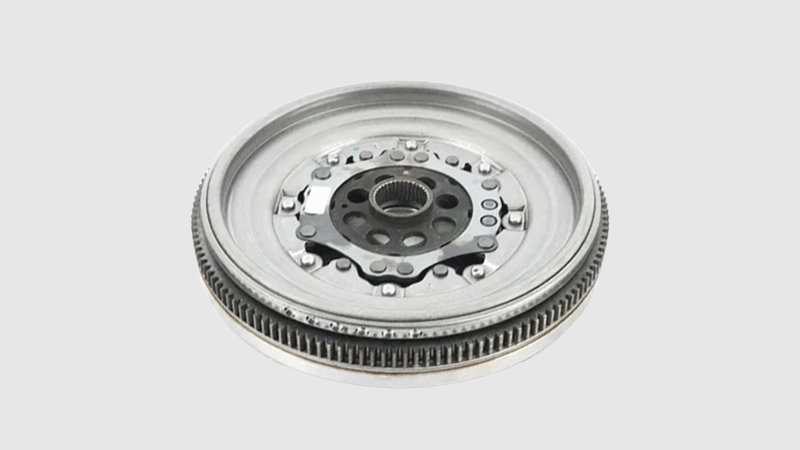
In the drivetrain of high-end German vehicles, the dual-mass flywheel (DMF) is a core component that ensures smooth power delivery and damping engine vibrations.
However, as mileage accumulates, many models equipped with classic powertrains, such as the Volkswagen EA888 and EA211, may begin to experience issues including vehicle-wide idling vibrations, severe shock during gear shifting, or metallic knocking noises from the chassis.
These symptoms not only compromise the premium driving and riding experience provided by the vehicle, but more importantly, they indicate that the dual-mass flywheel has reached the end of its service life, or that the vehicle has been equipped with inferior aftermarket replacement parts.
Three typical symptoms of dual-mass flywheel failure
If your vehicle exhibits any of the following symptoms, it indicates that the dual-mass flywheel has experienced performance degradation or structural failure. Prompt inspection and replacement are required to avoid more costly repairs:
1.Severe steering wheel and seat vibration during engine idling
During engine idling, regular and pronounced low-frequency vibrations are felt through the steering wheel and seats, which persist even after the engine has reached operating temperature.
This is a typical indication that the internal springs of the dual-mass flywheel have lost their balancing capability.
2.Abnormal noise during acceleration and shift shudder
When engaging the clutch during vehicle launch or rapid acceleration gear shifts, a "clanking" or "rustling" metallic knocking sound can be heard from the chassis. Meanwhile, power delivery becomes unsmooth, accompanied by pronounced shift shudder. In this condition, the clutch disc and pressure plate are subject to abnormal friction, significantly shortening their service life.
3.Accelerated wear of the transmission
When the internal springs of the DMF are unable to absorb peak torque shocks, the engine's rigid vibrations are transmitted directly to the rear end of the drivetrain.
This exposes the internal transmission components, including gears, synchronizers, and bearings, to excessive impact loads, leading to accelerated wear.
Three fatal flaws of inferior dual-mass flywheels
Many low-cost aftermarket dual-mass flywheels available on the market fail to meet OEM damping standards and durability requirements due to inferior manufacturing processes, use of substandard materials, and a lack of proper testing standards.
This explains why the performance of some vehicles worsens after repair. These products typically suffer from three major defects:
1.Rapid degradation of spring performance
Inferior flywheels often use ordinary spring steel. Under heavy loads or high-frequency compression, they tend to suffer fatigue damage or fracture after about 30,000 kilometers of driving. This leads to a complete loss of damping performance and severe vehicle body vibrations.
2.Lubricating grease degradation and failure
The spring guide grooves inside the dual-mass flywheel require the use of very high-grade, specialized lubricating grease. Inferior products, however, use ordinary grease, which tends to emulsify, dry out, or degrade within two years in the engine's high-temperature environment. This causes the internal mechanical structure to shift from "elastic cushioning" to "rigid impact".
3.Welding process and dynamic balance defects
DMFs demand extremely high dynamic balance precision. Inferior products are often assembled using manual welding, which results in uneven weld beads and non-uniform torque distribution. Their dynamic balance is usually "corrected" by arbitrarily attaching counterweights to the surface, rather than through precise material removal (de-weighting). This leads to severe drivetrain vibrations at high speeds.
Industry warning: Choosing an inferior flywheel can easily lead to a vicious cycle of "flywheel replacement, clutch replacement, and transmission overhaul". This not only leads to high maintenance costs, but also causes serious driving safety risks.
Dual-mass flywheel replacement guide
The service life of a dual-mass flywheel is typically 7 years or 150,000 kilometers. Currently, vehicles worldwide equipped with the Volkswagen EA888 engine and classic dual-clutch or manual transmissions are entering a peak replacement cycle for these components.
Choose products in line with OE specifications: Prioritize dual-mass flywheels manufactured strictly in accordance with original dimensional, material, and process standards, and avoid using low-cost products of unknown origin or without published technical specifications.
As a leading brand deeply rooted in the Volkswagen Group (VAG) aftermarket, Borsehung offers original-quality dual-mass flywheels that precisely fit the following core VAG vehicle families:
Skoda: KAR 18-25/KOD 17-24/OCT 18-21/OCT 20-25/SUP 15-24
VW: ART 17-25/GO 18-21/GOM 18-21/GOV 18-21/GOVM 18-21/GOLF 17-20/GOLF 20-25/JE 20-25/PA 15-24/TIG 16-24/TIGL 18-25/TOU 16-25/TRO 18-25
SEAT: AT 16-25/FOR 21-25/LE 17-20/LESC 20-25/TAR 19-25
AUDI: A3 17-20/A3 20-21/A3RS3 22-25/A3CA 17-21/AQ2 17-25/ATT 15-24
Borsehung original-quality dual-mass flywheel: eliminating vibrations and noises at the source.
To address common quality issues of flywheels frequently seen in the aftermarket, Borsehung strictly adheres to original equipment manufacturing standards and raw material specifications, and has fully optimized product performance. It effectively resolves difficult problems such as idling vibrations, acceleration noises, and shift shudder.
The Borsehung dual-mass flywheel provides full protection for the clutch and transmission assembly, and significantly reduces long-term maintenance costs, making it the preferred high-quality solution for DMF replacement repairs on VAG models.