

Camshaft Adjuster Common Fault Diagnosis and Borsehung Professional Adaptation Guide
21.08.2026
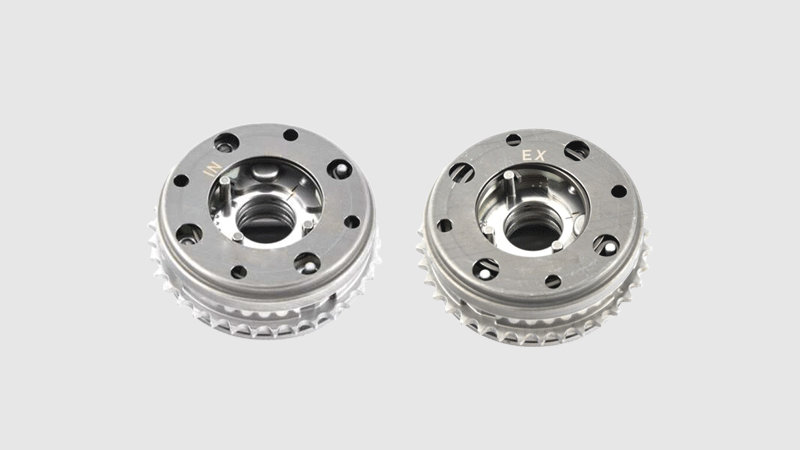
In modern high-performance engines, the camshaft adjuster (VVT phaser) serves as the key actuator of the variable valve timing system, bearing the essential responsibility of regulating valve timing in real time.
Proper timing adjustment significantly optimizes combustion efficiency, boosts power output, and lowers fuel consumption and emissions.
For demanding BMW and MINI models, the reliable operation of the camshaft adjuster is absolutely essential.
Core function and working principle of the camshaft adjuster (VVT)
The core purpose of the VVT system is to optimize the combustion process based on real-time engine operating conditions (such as speed and load), thereby enhancing overall performance.
A complete VVT system is composed of engine ECU, VVT phaser (i.e., the camshaft adjuster), solenoid valve (OCV), camshaft/crankshaft position sensors, and internal hydraulic oil passages. Its control logic is as follows:
Signal acquisition and calculation: The engine ECU receives real-time signals from the speed, load, and position sensors and calculate the optimal valve timing.
Hydraulic switching: The ECU sends a command to the VVT solenoid valve (OCV), which precisely regulates the hydraulic circuit by changing oil flow direction and pressure.
Phase regulation: High-pressure engine oil drives the rotor inside the camshaft adjuster to rotate relative to the housing, altering the camshaft angle and thereby advancing or retarding the valve timing.
Diagnosis of common fault causes for the camshaft adjuster (VVT)
When the variable valve timing system malfunctions, it typically triggers fault codes in the engine control unit (e.g., timing position deviation) and may also cause rough idling, sluggish acceleration, or unusual noises during cold starts. The root causes can be grouped into the following three categories:
1. Lubrication and hydraulic system issues (most common)
The VVT adjuster is essentially a high-precision hydraulic actuator driven by engine oil. It is highly sensitive to oil condition:
Improper oil level: Insufficient oil may result in low oil pressure, preventing the adjuster from locking or adjusting quickly. Conversely, excessive oil can increase rotational resistance.
Degradation of oil quality: Extended oil change intervals or the use of low-quality oil can result in sludge buildup inside the engine, which may clog the fine oil passages and strainers in the adjuster and solenoid valve.
Inappropriate oil viscosity: Oil that is too low in viscosity (which may cause oil film failure at high temperatures) can compromise sealing performance and prevent adequate oil pressure from building up. Conversely, overly high viscosity reduces flowability and results in sluggish response.
External oil circuit blockage: Blockage of the cylinder head oil supply passage or strainer by debris can interrupt the oil supply to the adjuster.
2. Timing system and control system-related faults
VVT solenoid valve (OCV) faults: The valve spool may become stuck due to sludge buildup, preventing the oil circuit from switching. Besides, the solenoid coil may degrade and overheat, resulting in burnout and complete failure.
Position sensor failure: Damage to the camshaft/crankshaft position sensors, or contamination or deformation of their target wheels, may prevent the ECU from receiving accurate phase signals and trigger a fail‑safe mode.
Timing chain elongation and tensioner failure: Timing chain elongation can cause a general shift in valve timing. Loss of tensioner pressure may result in insufficient chain tension, potentially leading to tooth jump in severe cases.
3. Mechanical wear of the adjuster body (phaser)
Internal leakage: Wear and degradation of the seals (typically made of rubber or Teflon) between the adjuster's internal rotor vanes and housing can lead to internal pressure loss. Consequently, the locking spring may fail to maintain the adjuster in its initial (usually retarded) position.
Locking pin seizure: If the mechanical locking pin designed to prevent stall‑induced kickback becomes corroded or seized, it can produce severe gear‑rattling noise on cold starts or may fail to disengage entirely.
Bearing wear: Wear of the internal support bearing can result in excessive clearance, which may cause mechanical noise and rough operation.
Professional adaptation solution for Borsehung camshaft adjusters
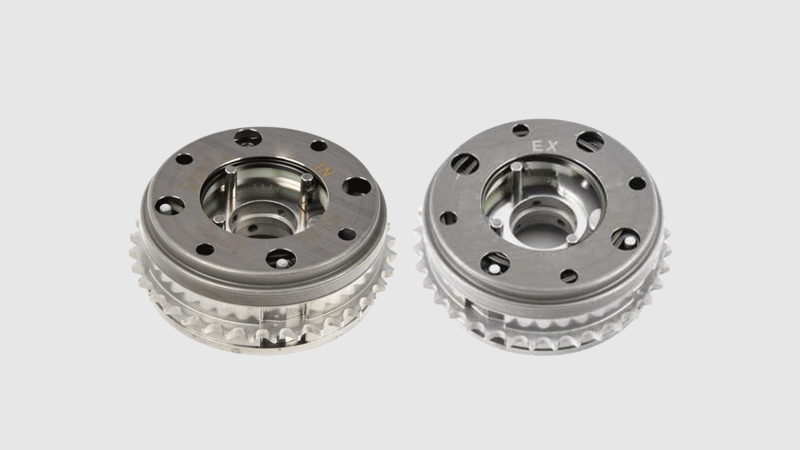
As a professional brand focused on the European automotive aftermarket, Borsehung manufactures camshaft adjusters that follow stringent quality control standards. These products offer a highly reliable, precisely matched replacement solution that covers BMW and MINI's mainstream engine platforms.
| Borsehung Nr. | Ref Nr. | Series | (Model / Chassis / Year) |
| B13419 | 11368617692+11368617693 | 1.2L: B38A12A 1.5L: B36A15A B38A15A B38A15C B38B15A B38K15A 1.6L: B48B16A 2.0L: B46A20A B46A20B B46B20B B48A20A B48A20B B48A20C B48B20A B48B20B N20B20C 3.0L: B58B30A | BMW: • 1 Series (F20 LCI 15-19 / F21 LCI 15-19) • 2 Series (F22 13-17 / F23 14-17 / F45 14-18 / F46 15-18) • 3 Series (F30 LCI 15-19 / F31 LCI 15-19 / F34 LCI 16-21) • 4 Series (F32 13-17 / F32 LCI 17-20 / F33 13-17 / F33 LCI 17-20 / F36 14-17 / F36 LCI 17-21) • 5 Series (G30 16-20 / G31 17-20 / G38 17-20)7 Series (G11 15-19 / G12 15-19) • i8 (I12 14-18) • X Series (X1 F48 15-19 / X2 F39 17-23) MINI: • Cabrio F57 (15-21) • Clubman F54 (15-19) • Countryman F60 (16-20) • MINI F55 (14-21) / F56 (13-21) |
| B13420 | 11368684921+11368684920 | 1.2L: B38A12A 1.5L: B32S15A B36A15A B38A15A B38A15C B38B15A B38K15A 1.6L: B48B16A 2.0L: B42S20A B46A20A B46A20B B46B20B B48A20A B48A20B B48B20A B48B20B 3.0L: B58B30A | BMW: • 1 Series (F20 LCI 15-19 / F21 LCI 15-19) • 2 Series (F22 13-17 / F22 LCI 17-21 / F23 14-17 / F23 LCI 17-21 / F45 14-18 / F45 LCI 18-21 / F46 15-18) • 3 Series (F30 LCI 15-19 / F31 LCI 15-19 / F34 LCI 16-21 / G20 18-22 / G20 LCI 22-24) • 4 Series (F32 13-17 / F32 LCI 17-20 / F33 13-17 / F33 LCI 17-20 / F36 14-17 / F36 LCI 17-21 / G22 20-24 / G26 21-24) • 5 Series (G30 16-20 / G30 LCI 20-23 / G31 17-20 / G38 17-20) • 6 Series (G32 17-20) • 7 Series (G11 15-19 / G12 15-19) • i8 (I12 14-18 / I12 LCI 18-20 / I15 18-20) • X Series (X1 F48 15-19 / X1 F48 LCI 19-22 / X1L F49 16-19 / X1L F49 LCI 19-23 / X2 F39 17-23 / X3 G01 17-21 / X3 G01 LCI 21-24 / X4 G02 18-21) MINI: • Cabrio F57 (15-21) • Clubman F54 (15-19) • Countryman F60 (16-20) / F60 LCI (20-24) • MINI F55 (14-21) / F56 (13-21) |
Maintenance recommendations for the VVT system
Given the high dependency of the VVT system on engine oil, the key to preventing issues lies in adhering to proper maintenance practices:
1. Use oil that meets OEM specifications
Adhere strictly to the manufacturer's recommended oil grade and viscosity rating. Using substandard oil or oil with an inappropriate viscosity is a main cause of VVT system failure.
2. Change oil regularly
Change the oil and filter at the manufacturer's recommended intervals to keep sludge from blocking VVT oil passages.
3. Inspect the VVT system regularly
During every maintenance, check that the OCV solenoid valve is functioning correctly, and clean the VVT oil passages and strainer to remove carbon deposits and ensure smooth oil circulation.
4. Use high-quality components
Replace with Borsehung original-quality parts to ensure reliable operation of the VVT system.