
Why Engine Coolant Temperature Sensors Fail So Often?
28.08.2026
The coolant temperature sensor is one of the most basic—yet most easily overlooked—“high-failure-rate” components in an engine’s electronic control system. It directly affects four major systems: cooling, fuel injection, ignition, and heating. In this article, Borsehung will use global aftermarket data to explain its function, common causes of failure, and replacement guidelines.
What Is an Engine Coolant Temperature Sensor?
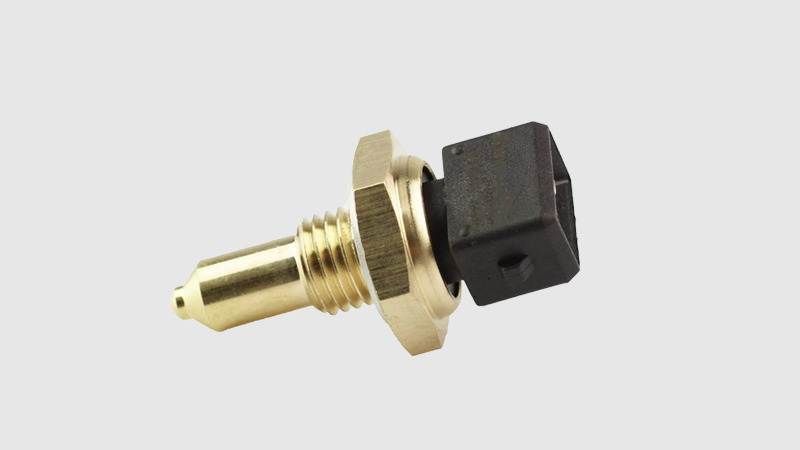
Engine coolant temperature sensors are typically mounted at the rear of the engine cylinder head or on the thermostat housing. They monitor changes in engine coolant temperature in real time and convert this critical data into an electrical signal that is transmitted to the ECU (Engine Control Unit).
Core Functions:
Upon receiving the coolant temperature signal, the ECU works in concert to regulate the following four core systems:
- Cooling Control: The ECU automatically adjusts the electric fan speed and thermostat opening based on coolant temperature to prevent the engine from overheating or running too cold.
- Precise Fuel Injection Control: During cold starts, fuel injection is increased to ensure smooth idling; after the engine warms up, fuel injection is reduced to improve fuel economy.
- Ignition Timing Adjustment: The ECU dynamically adjusts the ignition advance angle based on coolant temperature to prevent engine knock and enhance power output.
- Heater System: Works in conjunction with the automatic climate control system to optimize the timing of warm air delivery to the cabin.
Analysis of the Coolant Temperature Sensor’s Construction
| Component | Function | Related Failures |
| Thermistor (NTC) | Core temperature-sensing element; resistance varies with temperature. | Resistance aging → Inaccurate temperature readings |
| Wiring Harness Connector | Transmits signals to the ECU | Corrosion of the connector, wear on the wiring harness → Short circuit/open circuit. |
| Housing | Secures the sensor and ensures thermal conduction | Cracks or deformation leading to poor thermal contact |
| Seal (O-ring) | Prevents coolant leakage | Seal aging → Coolant leak |
Why Is the Failure Rate of Coolant Temperature Sensors as High as 70%?
In everyday automotive use, the coolant temperature sensor is a high-frequency, wear-prone component. According to statistics, over its service life, sensor failures account for as much as 70% of related repairs. The primary failure modes include:
1. Aging of the NTC Thermistor Leading to Inaccurate Temperature Readings
When subjected to extreme temperature cycling between -40°C and +150°C over an extended period, the NTC material undergoes physical degradation, causing the resistance output to drift. When the ECU receives an incorrect coolant temperature signal, it can cause problems such as difficulty starting cold, rough idling, abnormally high fuel consumption, and even excessive exhaust emissions.
2. Water Leaks Due to Aging Seals
Rubber seals can harden and crack under prolonged exposure to coolant corrosion and high temperatures, leading to a drop in cooling system pressure and coolant leaks. In severe cases, this may cause the engine to overheat.
3. Connector Corrosion and Wiring Harness Failures
Moisture, oil residue, and severe vibrations in the engine compartment can easily cause oxidation and corrosion of connector pins or wear on the wiring harness, leading to signal short circuits or open circuits, which directly trigger the Check Engine Light on the instrument panel.
Replacement Interval
Since the coolant temperature sensor is a high-frequency, wear-prone component, we recommend:
Replacement Interval: 4–6 years.
In areas with high humidity and heat, frequent short trips, or heavy traffic, we recommend inspecting the sensor as early as 4 years;
When replacing the sensor, be sure to replace the seals at the same time and check the wiring harness connectors for corrosion;
Prioritize OEM-grade NTC components whose resistance curves match the ECU calibration, avoiding "erratic readings from aftermarket parts."
Why Choose Borsehung Coolant Temperature Sensors?
- All Borsehung products are manufactured by OEMs
This means that every Borsehung coolant temperature sensor is identical to the original equipment installed in the vehicle at the factory, ensuring signal accuracy and seamless compatibility with the ECU for plug-and-play operation.
- 4-Year Warranty
Compared to the industry-standard 1–2-year warranty, the 4-year warranty not only completely alleviates the concerns of repair shops and dealers but also serves as a strong commitment to the product’s durability.