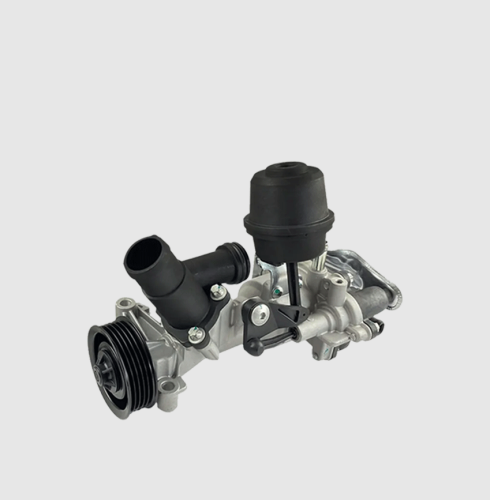

Why Do VW Door Handle Brackets Keep Breaking?
07.08.2026
Volkswagen owners and professional auto repair technicians often encounter issues with the exterior door handle becoming loose, shaking severely, or occasionally getting stuck when pulled. In serious cases, this makes it impossible to open the door. Many people assume the door handle is damaged, but in fact, it is the door handle bracket that has aged and fractured.
What is a door handle bracket?
The door handle bracket serves as the core component for mounting the exterior handle and linking it to the internal latch mechanism, directly ensuring normal handle function and smooth door opening.
Core components:
Bracket body: The main body that bears the overall tensile force and the internal lever assembly.
Handle mounting bracket: It is used for precise alignment and fixation of the pivot shaft and linkage of the exterior handle.
End cap mounting bracket: It is used to fix the anti-theft lock cylinder or decorative end cap at the tail end of the exterior handle.
Common fault symptoms
When you encounter the following phenomena, it is likely that the door handle bracket is broken:
The handle shakes or feels loose: The handle bracket is worn out or loose.
The handle fails to spring back: The internal bracket is fractured and the spring has lost support.
The car door cannot be opened from the outside yet works fine from the inside: A fractured bracket prevents the pulling force from transferring to the latching mechanism.
When pulling hard, the handle directly "comes off": The bracket is completely fractured.
Why do Volkswagen owners frequently replace their door handle brackets?
Based on after-sales maintenance data and structural engineering analysis, the high incidence of failures in Volkswagen door handle brackets stems from the following three core reasons:
Inherent stress defects in OEM structure
Some Volkswagen OEM brackets feature an overly thin central support point design. During daily door opening (especially abrupt or forceful pulling by passengers), all pulling forces are momentarily concentrated on the weak support shaft, which easily leads to structural breakage.
Material aging and environmental factors
There are significant differences in durability among different material brackets:
ABS plastic/TPU: These materials are mostly used in low-end or ordinary replacement parts, with poor fatigue resistance and weatherability. As vehicle age increases, cyclic high/low temperature exposure causes natural aging, embrittlement and abrasion of plastic parts over time.
Aluminum alloy/stainless steel: These materials are commonly found in high-end and OEM parts, with high tensile strength and corrosion resistance, and not prone to physical deformation.
Huge vehicle parc combined with increasing vehicle age
Volkswagen models have a massive global vehicle parc, with numerous classic models aging progressively, causing internal mechanical and plastic components to enter a concentrated period of failure. The large installed base drives the demand for handle bracket replacements particularly prominent in the aftermarket.
Why choose Borsehung door handle brackets?
In the face of frequent replacement demand for Volkswagen models, it is crucial to choose high-quality replacement parts to avoid secondary damage and labor costs caused by repeated disassembly of door panels. Borsehung provides high-standard spare parts solutions for the aftermarket:
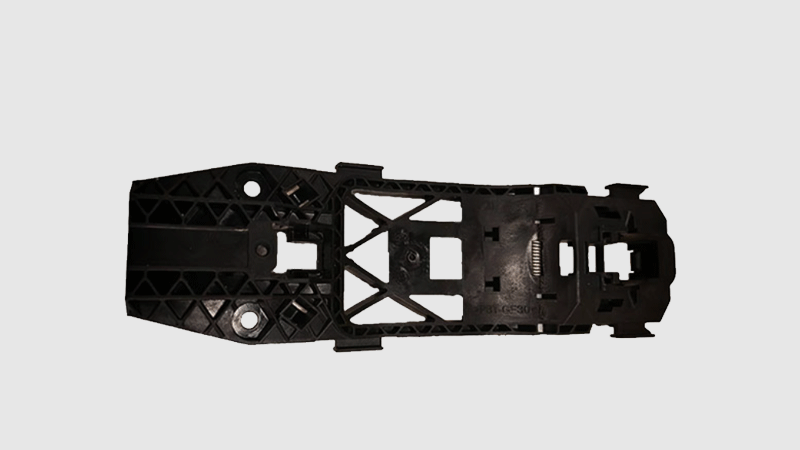
100% genuine OEM-equivalent products: Borsehung brackets are manufactured in strict accordance with OEM technical standards and material specifications to ensure that the installation holes and structural dimensions are perfectly and seamlessly matched with the original car door latching system.
High durability and optimized stress distribution: Premium materials are adopted and the fracture-prone structure is specifically reinforced, eliminating the inherent defect of fragile OEM brackets susceptible to fracture.
Stable and continuous supply system: Relying on a mature supply chain, Borsehung provides stable and continuous in-stock supply to global customers, meeting the urgent market demand for high-frequency spare parts for Volkswagen models.