


Failures of auxiliary electronic water pumps are common issues in vehicle models equipped with a turbocharged or hybrid power system.
Common failures include the following:
Electrical failures: These failures include control module damage, circuit malfunction, and motor burnout.
Mechanical failures: These failures include abnormal noise and water leakage due to bearing wear and impeller corrosion/blocking.
System failures: Scale and bubbles may be generated if the coolant is not replaced after long use, and may result in poor heat dissipation or even pump seizure.
Causes of failures of a water pump:
Motor wear
Components of a water pump may wear over time. The normal coil resistance of a motor typically ranges from 2Ω to 5Ω. Beyond this range, the motor may fail to operate.
High temperature corrosion
If the temperature in the engine compartment exceeds 120°C, aging of seals will accelerate, and plastic components will become brittle. In severe cases, water leakage may occur, causing water ingress and short circuit in electrical connectors.
Insufficient cooling
The coolant level has been too low for an extended period, causing inadequate lubrication and heat dissipation of the water pump and failure due to dry friction.
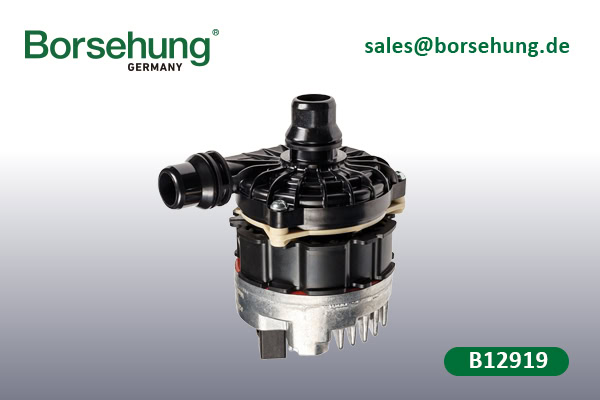
Maintenance recommendations for an electronic water pump:
Replace coolant with designated product regularly to prevent scale and corrosion.
Pay attention to alarm indicators on the dashboard (such as water temperature alarm) or vehicle message indicating “cooling system failure”.
If abnormal noise, unexplained coolant reduction, or abnormal water temperature is discovered, timely inspection should be performed.